05/21/26
Governors Spencer Cox and Mark Gordon to talk permitting reform at the final Energy Superabundance workshop
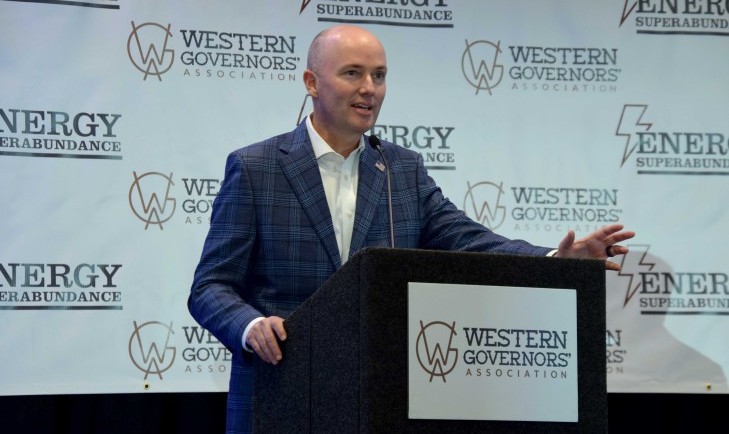
“Capital is a coward,” Utah Governor Spencer Cox said during a discussion with Wyoming Governor Mark Gordon at WGA’s final Energy Superabundance initiative workshop. “It’s going to flee when there’s uncertainty.”
As the West faces massive growth in energy demand, both Governors emphasized the need for permitting and regulatory reform to unlock the generation, transmission, and energy infrastructure needed to ensure reliability and affordability.
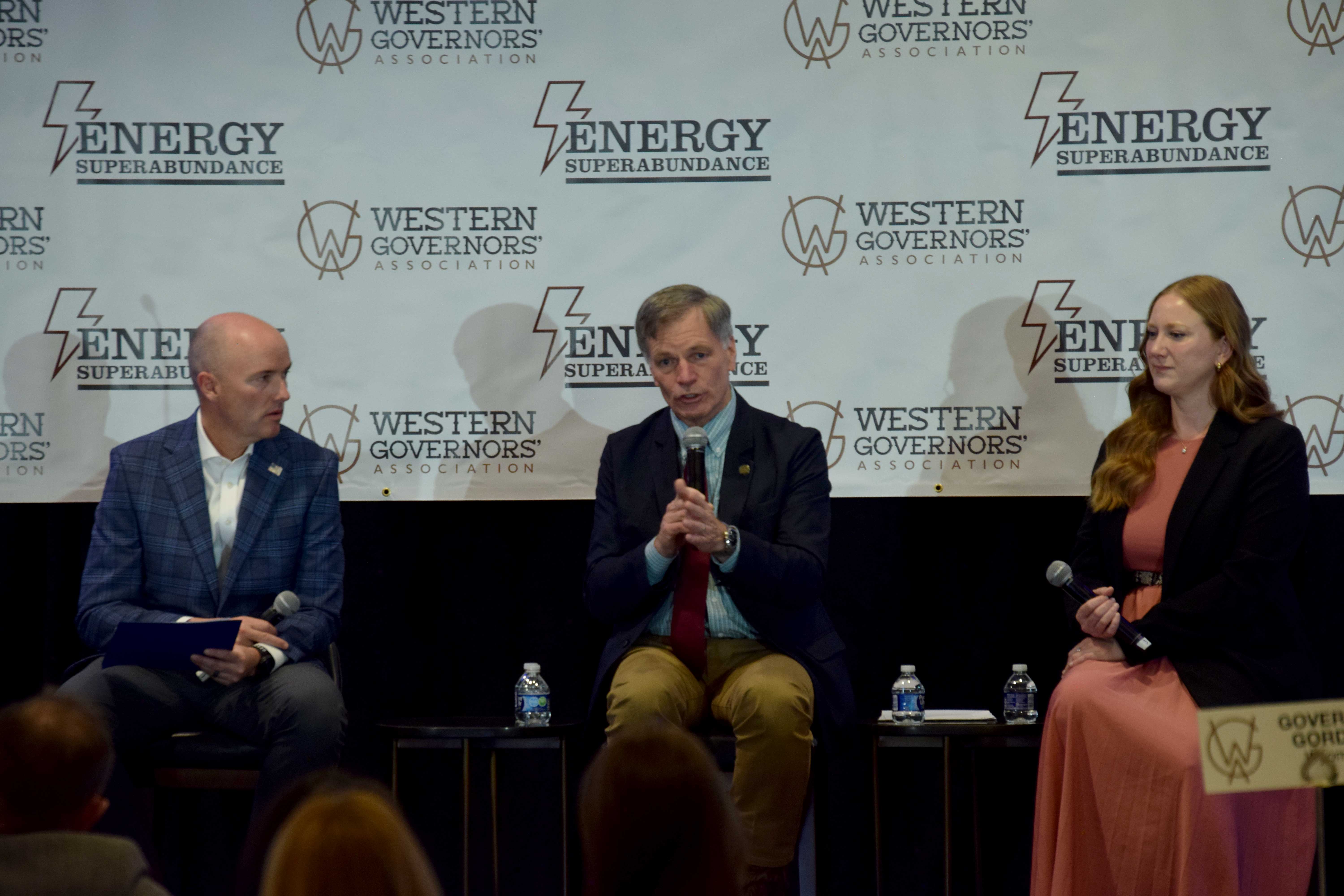 “NEPA was an incredibly foresightful law,” Governor Gordon said. “It said, let’s take a look at what we’re doing and think about what the consequences might be. I would argue that the Alaska pipeline would not have worked if we hadn’t had NEPA, or at least it would have had substantial failures. Since NEPA’s inception, however, it has been so changed by laws and legal precedents and other things that it’s become what you might say is ‘banana’ — build absolutely nothing anywhere near anybody — and that is incredibly problematic.”
Over the course of the two-day workshop, panelists echoed the Governors’ concerns across discussions on nuclear power, geothermal energy, hydropower, long-duration energy storage, energy transmission, and critical mineral supply chains. They argued that overly burdensome regulations can undermine the very environmental goals they are meant to protect by delaying the deployment of cleaner energy technologies, pushing resource extraction to countries with weaker environmental and labor standards, limiting domestic economic opportunity, and creating broader national security risks.
“There’s this misnomer out there that you have to choose between speed and environmental safety regulation,” Governor Cox said. “That is certainly not true.”
Governors Cox and Gordon, along with workshop panelists, emphasized that many solutions already exist — but advancing them will require bipartisan collaboration and action at the federal level.
“The truth is, the innovation in energy policy is happening in states like Utah and Wyoming, and other states are following us,” Governor Cox said. “Now, we’ve got to get there at the federal level… All of this is coming to a head in a way that can lead to really important generational changes in policy and structure that are good for our country if we can get this right.”
To watch recordings from any of the workshop's panels, visit WGA's YouTube channel or click the titles below.
The Honorable Spencer Cox, Governor of Utah, provided Opening Remarks before being joined by The Honorable Mark Gordon, Governor of Wyoming, to engage in a discussion moderated by Jack Waldorf, WGA Executive Director, on opportunities for improvement, innovation, and collaboration to achieve energy abundance.
Governors' Conversation on Permitting
Governors were later joined by Emily Domenech, Executive Director of the Federal Permitting Improvement Steering Council, to discuss permitting needs and opportunities.
Meeting rapidly growing global energy demand requires immediate, scalable solutions to maintain grid reliability and energy security. Expanding and bolstering proven, in-place energy options like sources like wind and solar and investing in existing thermal power plants to improve their efficiency and extend their longevity can help meet energy demand. When paired with energy storage options, these technologies can provide firm, dispatchable power and contribute meaningfully to today’s reliability and capacity needs.
- Panelists: Adam Dice, Senior Vice President of Renewables, WSP USA; Joseph Hulse, Director of Business Development, Williams; Eric Kang, Senior Manager of Commercial Development, TerraPower; Paul Maguire, Chief Engineer, Public Utilities Commission of Nevada
Investing in Long Duration and Grid Scale Storage
Long-duration and grid-scale energy storage present a significant opportunity to strengthen grid reliability, integrate more variable energy resources, and provide firm capacity during periods of extended peak demand or low generation. Technologies like pumped hydro, thermal storage, and advanced batteries can help smooth variability, defer transmission upgrades, and improve system resilience. However, scaling up and deploying these technologies faces many challenges, including high upfront capital costs, long development timelines, market uncertainty, and siting and permitting challenges.
- Panelists: Theresa Foxley, Chief of Staff, rPlus Energies; Patrick Reedy, Head of Hardware Products, Torus; Aric Saunders, Executive Vice President of Commercialization, Noon Energy; Mark Thompson, Senior Director of State Affairs, Form Energy. Moderated by: Rachel Chamberlain, State Energy Strategist, State Support Center, S2 Strategies.
Innovative Financing for Energy Projects
Innovative financing mechanisms can play a critical role in accelerating energy infrastructure by reducing risk, attracting capital, and lowering the lifetime cost of new generation and transmission projects. These tools can make large, capital-intensive projects more financially viable and appealing to investors. This panel examined how innovative project financing can de-risk investments, encourage more development, and lower the life-time cost of new generation and infrastructure.
- Panelists: Robert Blake, Executive Director, Native Sun Community Power Development; Michael Johnson, Vice Chair, JP Morgan Chase Security and Resiliency Initiative; Ben Serrurier, Director of Government Affairs and Policy, Fervo Energy. Moderated by: The Honorable Mark Gordon, Governor of Wyoming
The Mountain West Geothermal Consortium
Michael O’Connor, Director of the Mountain West Geothermal Consortium provided updates and insights from the MWGC launch and kick-off workshop.
The cost of energy remains a growing challenge as customers face higher utility bills driven by rising demand, fuel price volatility, infrastructure upgrades, and more frequent extreme weather. Addressing affordability requires a multifaceted approach. This panel examined how strategies like expanding and diversifying energy supply, reducing system costs, improving efficiency, and ensuring that assistance reaches those most vulnerable can improve energy affordability for western residents.
- Panelists: Jeffrey Ackermann, Senior Policy Advisor, Center for the New Energy Economy; Charles Hua, Founder and Executive Director, Powerlines; William Malcolm, Government Affairs Director, Utilities; AARP; Chris Parker, Director, Utah Division of Public Utilities. Moderated by: Evan Jurkovich, Vice President of Government Relations, Tri-State Generation and Transmission Association
Critical Mineral Supply Chains
Critical minerals play an essential role in energy development, underpinning technologies such as batteries, solar panels, wind turbines, and other energy systems. However, the domestic production and processing of key minerals and rare earth elements remain limited. This panel explored how expanding responsible mining, refining, and recycling across the West presents a significant opportunity for strengthening energy security and achieving energy abundance.
- Panelists: Sid Smith, Government Affairs Manager, American Exploration and Mining Association (AEMA); Raef Sully, Chief Executive Officer, Lilac Solutions; Andrea Watson, Associate Laboratory Director, Innovation, Partnering, and Outreach, National Laboratory of the Rockies
Energy Superabundance in the West
Collaboration between states, whether for transmission planning and development, nuclear energy, or supply chain coordination, can support more predictable pathways for large-scale energy projects. Strategies like shared studies and timeline coordination, or formal agreements like interstate agreements and memoranda of understanding can help states leverage their unique skills, resources, workforces, and policy frameworks to bring to bear more innovative, cost-effective, efficient energy solutions.
- Panelists: Caleb Douglas, Principal Project Engineer, Schnabel Engineering; Joseph Gardner, Program Manager, Generation Major Projects; Salt River Project; Connor Nelson, Manager, Regulatory Affairs and Markets, National Hydropower Association; Michael Squires, Managing Director of Government Affairs, Utah Associated Municipal Power Systems (UAMPS). Moderated By: Amanda O’Connor, Western Business Director, Earth & Environment, WSP